
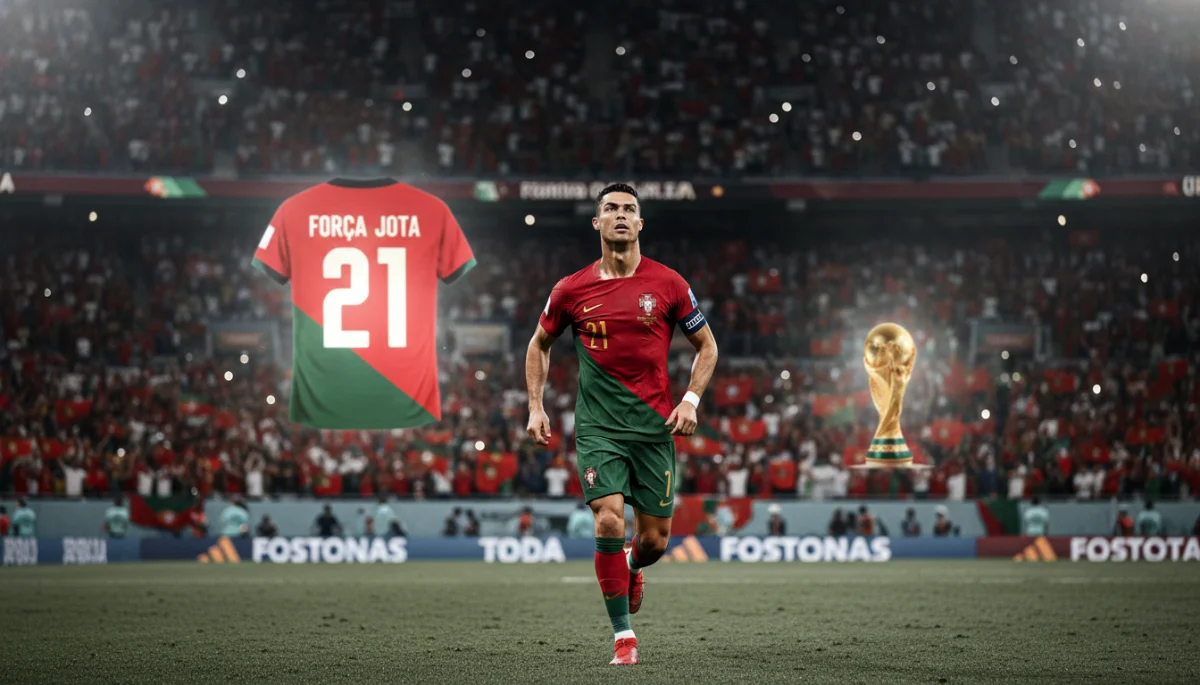

Portugal’s latest World Cup squad announcement arrived with two powerful themes running side by side: ambition and remembrance. On one hand, Roberto Martínez has leaned into experience by naming Cristiano Ronaldo again, keeping alive the possibility that the captain will add one more historic chapter to his international career. On the other hand, the reveal carried a heartfelt tribute to Diogo Jota, whose memory continues to shape the national team’s emotional identity.
The result is a squad that feels both practical and symbolic. Portugal is deep, technically gifted, and loaded with players who know how to manage big matches. It is also a group trying to carry the meaning of a teammate who is no longer there. That combination gives this campaign an unusual weight before a ball has even been kicked.
Ronaldo’s Next Landmark Is Still Within Reach
Cristiano Ronaldo remains the most talked-about name in Portugal’s setup, and for good reason. At 41, he is still chasing milestones that most players never approach. If he appears at the tournament, he could become one of the first male players to feature in six separate World Cups.
That achievement would sit alongside a record book already crowded with remarkable numbers. Ronaldo is still the all-time leader in men’s international goals and appearances, and he remains the only male player to score in five different World Cups. Even now, he is not just a legacy selection; he is a competitive advantage.
Martínez has been clear that the captain’s place is not automatic just because of his name. The coach values what Ronaldo brings beyond goals: leadership, training standards, confidence, and the ability to pull a team into the right mindset when pressure rises.
Why the captain still matters
- He provides a calm presence in tense knockout-style moments.
- He can change games with a single touch in the box.
- He gives younger attackers a reference point for professionalism.
- He remains a major threat on set pieces and penalty chances.
A Tribute That Gives the Squad Deeper Meaning
As important as Ronaldo is to the headlines, the most moving part of the announcement was the remembrance of Diogo Jota. The Liverpool and Portugal forward died in a car crash in Spain last year at the age of 28, a loss that stunned teammates, supporters, and the wider football world.
Martínez described Jota as Portugal’s “plus one forever,” a phrase that captures both grief and belonging. Because tournament squads are limited to 26 players, Portugal symbolically carried an extra name in spirit, honoring Jota as part of the journey even though he cannot be there physically.
For this group, that tribute is likely to mean more than a pre-match gesture. It can serve as a source of motivation, especially in difficult moments when the tournament demands emotional strength as much as technical quality.
How Portugal’s Squad Is Built
Portugal enters the tournament with one of the most complete rosters in the field. The squad blends veteran leaders, dynamic midfielders, aggressive fullbacks, and several forwards who can attack in different ways. That flexibility gives Martínez options that many national teams would envy.
The roster also reflects the modern shape of the Portuguese game: a mix of players from Europe’s biggest clubs, plus Ronaldo and João Félix representing Al Nassr. The balance of experience and athleticism should allow Portugal to adjust its style depending on the opponent.
| Unit | Standout Names | Primary Strength |
|---|---|---|
| Goalkeepers | Diogo Costa, José Sá, Rui Silva, Ricardo Velho | Depth and reliability |
| Defenders | Rúben Dias, João Cancelo, Diogo Dalot, Nuno Mendes | Balance between defending and buildup play |
| Midfielders | Bruno Fernandes, Bernardo Silva, Vitinha, João Neves | Creativity and control |
| Forwards | Cristiano Ronaldo, Rafael Leão, João Félix, Gonçalo Ramos | Speed, finishing, and tactical variety |
Goalkeeping and defense
Diogo Costa is the most likely starter in goal, with José Sá and Rui Silva offering dependable alternatives. Ricardo Velho’s inclusion as a fourth option suggests Portugal wants full insurance in case of injury, even if his role is likely to remain limited.
In front of them, Portugal’s defensive group is built to do more than simply clear danger. Rúben Dias anchors the back line with authority, while João Cancelo, Diogo Dalot, and Nuno Mendes provide the kind of width and overlap that can turn defense into instant attack. Nélson Semedo, Gonçalo Inácio, Renato Veiga, Tomás Araújo, and Matheus Nunes add even more cover and flexibility.
Midfield control and attacking rhythm
Portugal’s midfield may be the squad’s most impressive area. Bruno Fernandes and Bernardo Silva bring elite creativity and experience, while Vitinha and João Neves supply energy, movement, and clean passing under pressure. Rúben Neves and Samú Costa give Martínez additional balance if he wants a more compact shape.
This is the area where Portugal can decide games before the final pass even arrives. If the midfield dominates possession and keeps transitions under control, the team can spend more time dictating tempo and less time reacting to opponents.
Forward options with multiple game plans
The attack is where Portugal can truly mix and match. Ronaldo remains the focal point when Martínez wants a direct target in the box. Gonçalo Ramos gives the team a more natural central striker option. Rafael Leão, Pedro Neto, Francisco Conceição, Gonçalo Guedes, João Félix, and Francisco Trincão all provide different kinds of movement and pace.
That depth matters because it allows Portugal to attack wide spaces, press higher, or keep the ball and wait for openings. Very few teams can shift between those identities so smoothly.
The Road Through Group K
Portugal has been drawn into Group K, where it will face Congo, Uzbekistan, and Colombia. It is a group that offers variety rather than comfort. Each opponent brings a different challenge, which means Portugal will need to adapt quickly from the start.
The campaign opens against Congo in Houston on June 17, but the real preparation begins well before that. The squad is scheduled to gather on June 1, giving Martínez time to refine details and settle on a core group.
- June 6: Portugal vs. Chile
- June 10: Portugal vs. Nigeria
- June 12: Travel to the United States
- June 17: Portugal vs. Congo
Those warm-up matches will be especially valuable because they offer a chance to test partnerships, evaluate fitness, and see how the team responds under different tactical conditions. For a squad with this much talent, preparation may be just as important as raw quality.
Martínez Wants Belief, Not Just Expectations
Roberto Martínez has pushed back gently against the idea that Portugal should automatically be labeled a favorite. In his view, that word usually belongs to nations that have already won the World Cup. Portugal has not done that yet, but the coach clearly believes his side can challenge anyone on the right day.
There is evidence for that confidence. Portugal won the 2025 Nations League by beating Germany in the semifinals and Spain in the final, proving the squad can handle elite opposition in high-stakes environments. That success is not a guarantee of anything in a World Cup, but it does show the group is capable of rising to the occasion.
What Could Carry Portugal Deep Into the Tournament
Several factors make Portugal a serious contender rather than just a name with popular appeal:
- Depth across nearly every position
- Ronaldo’s experience and finishing ability
- Creative midfield play from Bruno Fernandes and Bernardo Silva
- Explosive width from Rafael Leão and Pedro Neto
- Reliable defensive leadership from Rúben Dias
- Recent success against elite European opponents
- A unifying emotional reason to play for Diogo Jota
If Martínez finds the right balance, Portugal can be dangerous in more than one way. It can win through control, punish teams in transition, or lean on the sort of veteran composure that matters most when knockout pressure arrives.
A Campaign Built on Memory and Ambition
For Ronaldo, this tournament could be the last major international stage of his career, and a World Cup trophy would complete a legacy already packed with records, major titles, and unforgettable performances. For Portugal, it is a chance to turn one of the strongest generations in team history into something even greater.
And for Diogo Jota, the campaign will always carry a deeper emotional thread. His absence is felt, but his place in the story has not disappeared. Portugal enters the tournament with talent, depth, and purpose, and every step forward will be taken with both history and memory in mind.